
Criminal Cases in the Albemarle County Courts
Albemarle General District Court hears adult misdemeanors, traffic cases, advisements, and felony preliminary hearings. A felony trial does not take place there. When a judge finds probable cause and certifies a felony, the matter moves toward the Albemarle Circuit Court, where a grand jury may return an indictment and the trial-level felony file develops. Circuit Court also hears a misdemeanor again when a proper de novo appeal is taken from General District Court. Each clerk is the custodian for records in that court, so the right counter depends on the proceeding shown in the docket.
Both Albemarle courts use 350 Park Street, Charlottesville, Virginia 22902. That mailing city causes real search errors. Charlottesville is an independent city with separate courts. The official Albemarle Circuit Court page identifies the county clerk and courthouse.
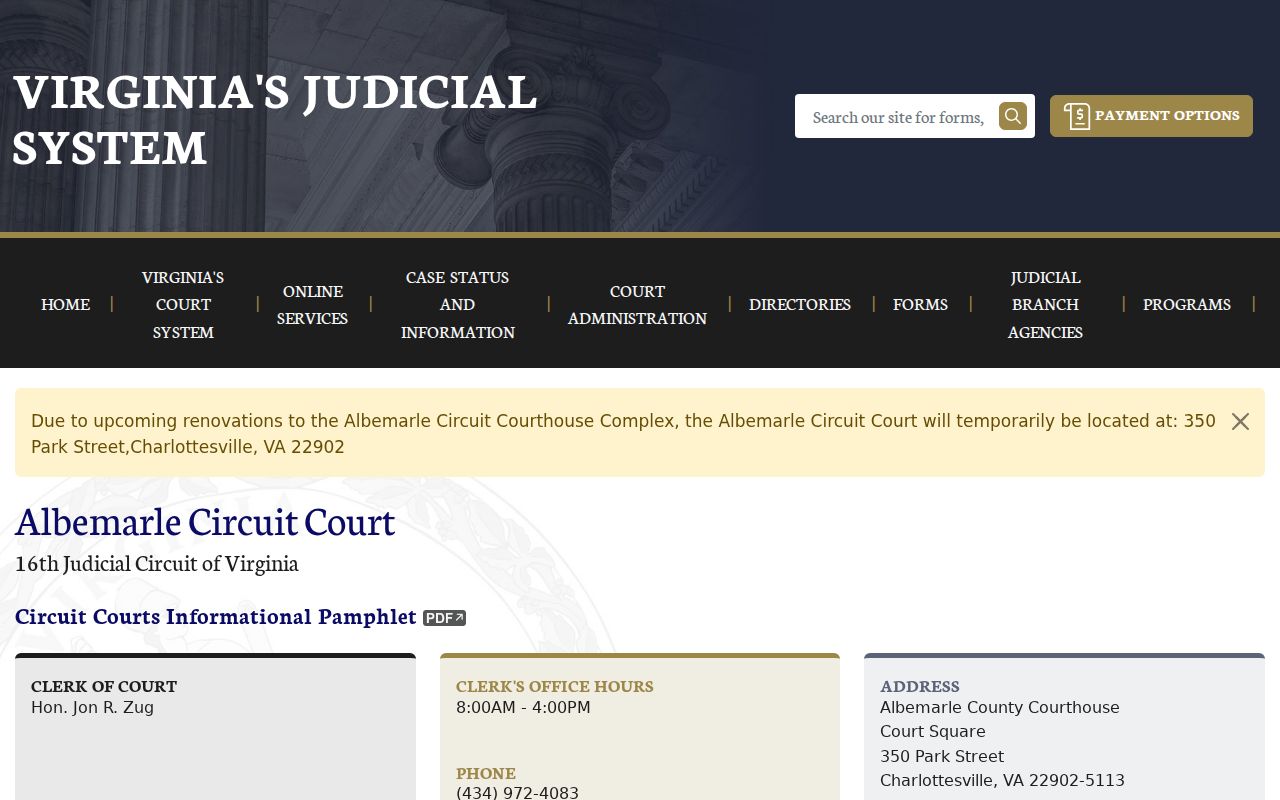
The court page is the best source for the criminal clerk line, current counter hours, term dates, and Albemarle County court identity.
Select Albemarle County Criminal Court
A Charlottesville street line does not tell a reader which court to select. Choose Albemarle General District Court for a misdemeanor, traffic charge, advisement, or felony preliminary record. Choose Albemarle Circuit Court for an indictment, felony trial, plea, final felony judgment, or sentence. Selecting Charlottesville General District or Charlottesville Circuit can return no Albemarle County criminal case even when a county file exists.
The Virginia Judiciary’s official Find a Case explanation separates the General District and participating Circuit systems.
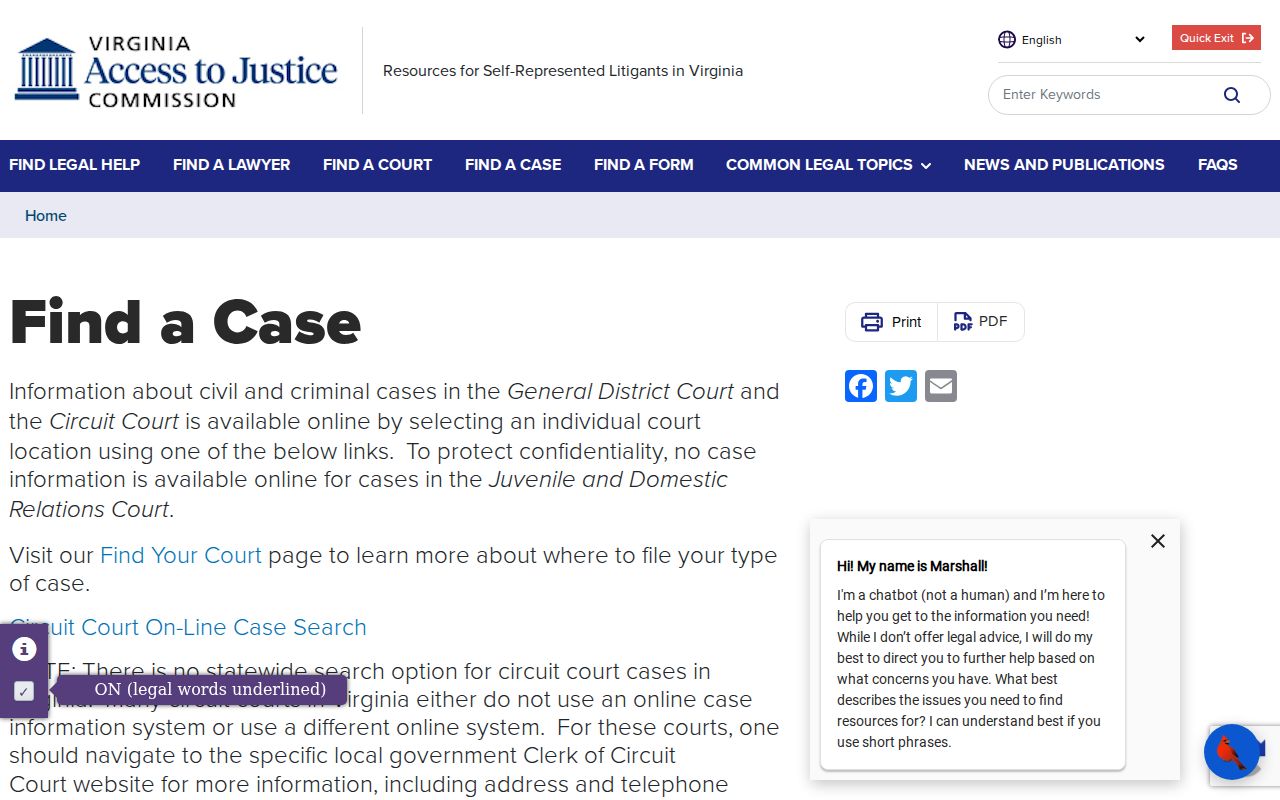
That split is why one name query cannot serve as a complete statewide Circuit Court search or replace a clerk’s certified record.
How to Search Case Records
Start with the court and case stage, not the defendant’s name alone. Common names may produce unrelated results. A case number is safer, but the General District and Circuit identifiers are separate. Save both numbers when following a felony from preliminary hearing to trial court. If a case is new, old, absent, or needs a certified copy, call the General District criminal clerk at (434) 972-4004 or the Circuit criminal line at (434) 972-4085.
- Open the Virginia Judiciary system and select Albemarle General District Court or Albemarle Circuit Court.
- Choose the criminal or criminal-and-traffic path, then search by exact case number when known.
- For a name search, enter the last name and use the first or middle name to reduce false matches.
- Confirm the court, charge date, case status, hearing history, and disposition before treating the result as the same matter.
- Ask the proper clerk for a plain copy, an order, or a certified copy when portal metadata is not enough.
The General District portal begins with an individual court choice, then offers criminal and traffic search routes. The participating Circuit system uses its own court selector and may offer name, case-number, or date paths. Search behavior and labels can change, but the jurisdiction rule does not: Albemarle County must be selected in the system that matches the case stage.
| Field | Type | Required | Use |
|---|---|---|---|
| Court | Selector | Yes | Pick Albemarle, not Charlottesville |
| Search by | Choice | Yes | Name or case number where offered |
| Last name | Text | Name route | Use the spelling on the charging record |
| First or middle name | Text | No | Narrows common surnames |
| Case number | Text | Number route | Use the identifier for that specific court |
| Hearing or date range | Date | No | Limits docket results where available |
Albemarle County Criminal Docket Rhythm
Albemarle General District Court ordinarily schedules criminal advisements on weekdays at 9:00 a.m., misdemeanor dockets on Tuesday mornings, and felony preliminary dockets on Thursdays at 9:30 and 10:30 a.m. Those events shape when the next docket entry may appear. A continuance can keep a felony in General District Court. A certification sends it forward, but the Circuit file may not be visible at once.
The official Albemarle General District Court page publishes the docket and entry rules.
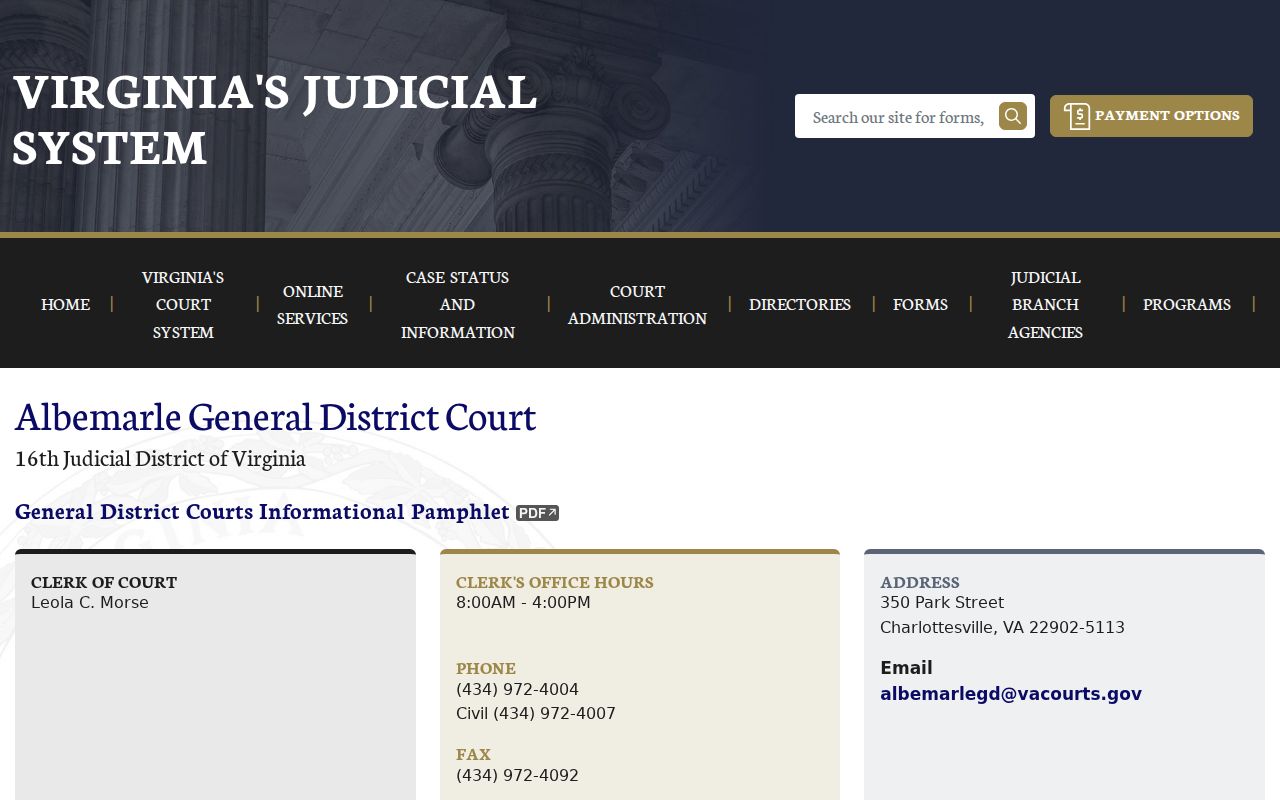
Readers should recheck the court calendar and use the clerk’s line rather than infer that a charge vanished between Albemarle County courts.
What the Case File Shows
An Albemarle County criminal case file is organized around one court proceeding. The portal usually gives metadata more often than document images. The clerk remains the source for a warrant, indictment, pleading, signed order, or certified judgment. Police narratives and the full Virginia CCRE history are different records held by different custodians.
Read each field in context. Bond is a pretrial release term, while a fine is part of a financial judgment. Court costs are separate assessments. A hearing result may show a continuance rather than an outcome. An appealed flag can point toward a Circuit proceeding, but it does not merge the lower court history into the new file.
| Case Number and Court | Identifies the exact Albemarle court file and keeps GDC and Circuit matters separate. |
|---|---|
| Charging Information | May show the charge description, Virginia Code section, VCC, class, and offense date. |
| Process and Bond | Can identify a warrant or summons and display bond information where reported. |
| Hearings | Lists dates, times, hearing types, continuances, and recorded results. |
| Plea and Disposition | Shows the plea, finding, outcome, and disposition date when entered. |
| Sentence and Financials | May list jail time, suspended time, fines, costs, payment status, or due dates. |
| Appeal or Cross-Reference | May flag an appeal or Circuit link, though the two courts keep different case numbers. |
Certified Albemarle County Criminal Cases
“Certified” on an Albemarle General District Court felony entry means the judge found probable cause at the preliminary stage and sent the charge toward the grand jury and Circuit Court. It is not a conviction. It is not a final Circuit disposition. After certification, keep the GDC number for the preliminary history, then locate the new Circuit number for later filings, plea events, trial activity, and sentence.
Albemarle Circuit Court criminal terms begin on the first Monday in February, April, June, August, October, and December. The grand jury sits on the first day of term, and criminal cases are set on Term Day. This calendar can create a normal gap between a GDC certification and the next visible Albemarle County criminal court case event. A “true bill” means the grand jury returned an indictment. A “no bill” means it declined to indict on the proposed charge.
Stages of a Criminal Case
The precise path depends on the charge. A misdemeanor is ordinarily tried in Albemarle General District Court. A felony starts there for advisement and a preliminary hearing, then moves to Albemarle Circuit Court if certified and indicted. Pleas, motions, and continuances can alter the order, and not every charge reaches a trial or sentencing.
Case flow: Charges Filed › Arraignment › Pretrial › Plea or Trial › Disposition › Sentencing
A dismissal, acquittal, or nolle prosequi ends a charge without a conviction on that count, but those terms do not mean the same thing. “Disposition” is the recorded outcome. “Sentence” is the court’s order after a conviction and may include confinement, suspended time, probation, fines, costs, or restitution.
Missing Albemarle County Court Orders
A portal can show the case header and docket while omitting the signed paper that answers the reader’s question. When an order image is missing, note the Albemarle court, full case number, party name as displayed, and order date. Ask that clerk for the specific existing document. Request a plain copy for reading or a certified copy only when formal proof is needed. The official Albemarle pages did not publish an exact current copy or certification fee, so confirm the charge with the clerk first.
The General District Court Case Information system is the official online route for the preliminary and misdemeanor side.
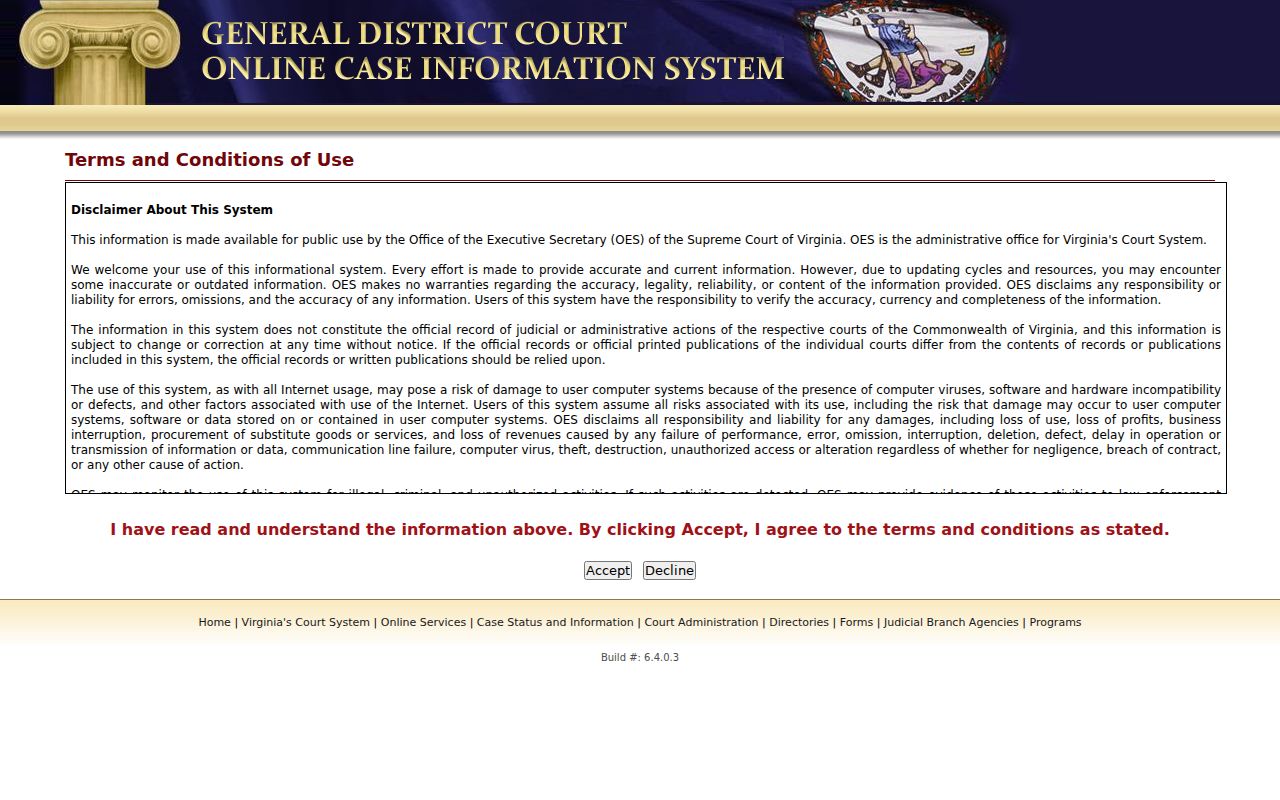
The search screen helps locate a case, while the Albemarle County clerk supplies documents and explains record-copy procedures.
Albemarle County Juvenile Case Boundary
The Albemarle and Charlottesville Juvenile and Domestic Relations District Court handles juvenile delinquency and family-related matters. Virginia Judiciary does not publish J&DR case details through the public online case system. That absence is a confidentiality rule, not evidence that no record exists. ACPD also states that even a parent needs a court order to obtain a juvenile police incident record under Virginia Code §16.1-301.
The official Albemarle J&DR Court page provides the proper court contact without exposing restricted case detail.
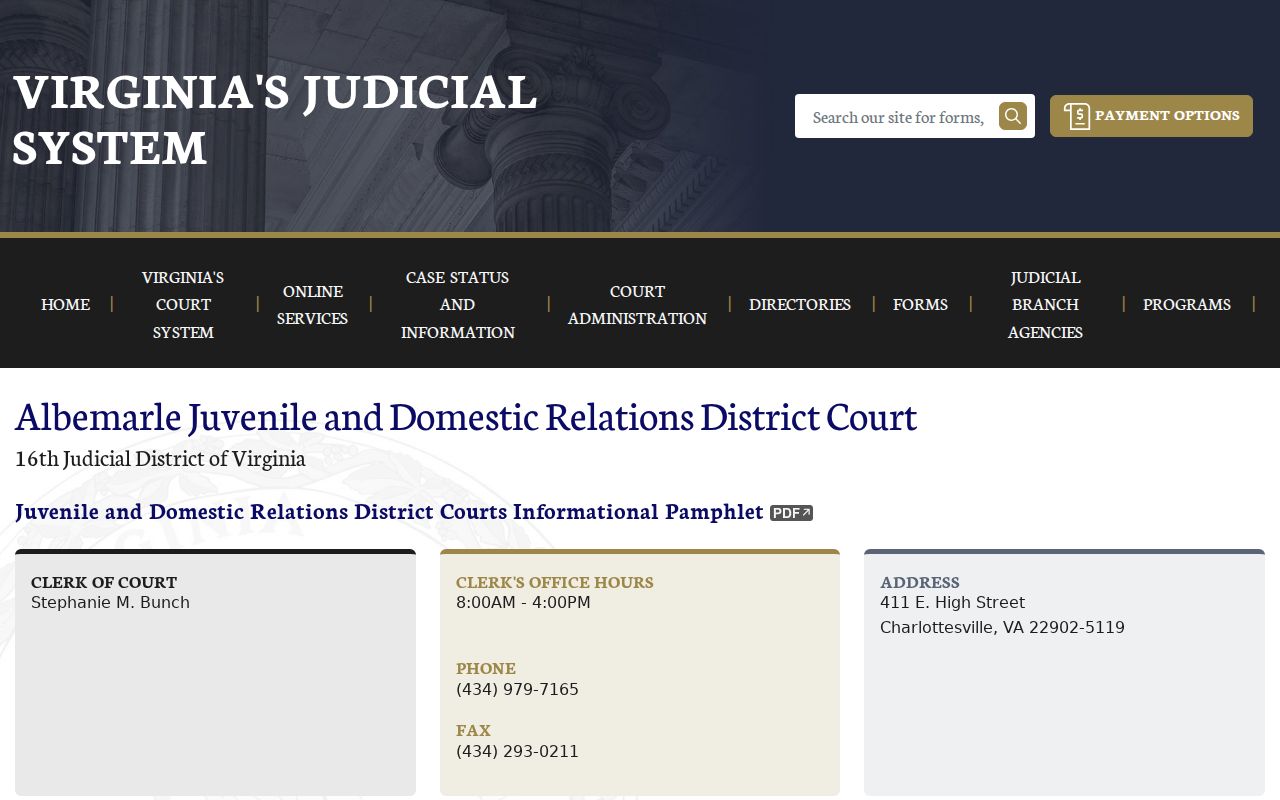
For a juvenile matter, use the court’s authorized process instead of trying to force a public adult-court search.
Access & Restrictions
Virginia Code §17.1-208 governs clerk access and copies, subject to sealed and confidential exceptions. Public displays omit full Social Security numbers, protected victim details, sensitive identifiers, and juvenile identities. Sealed or expunged records do not appear through ordinary access. A missing result can also stem from the wrong court, a spelling variation, entry lag, a different GDC and Circuit number, an older format, or a file that requires clerk help.
Virginia Freedom of Information Act requests fit ACPD-created records, not every item in a judicial file. Ask the Albemarle clerk for court pleadings and orders. Ask the arresting agency for its report. Ask Virginia State Police for an authorized CCRE history. The courthouse counter is open weekdays from 8:00 a.m. to 4:00 p.m. General District Court warns that cell phones will be secured and inaccessible unless permission is given, so carry the case number on paper.